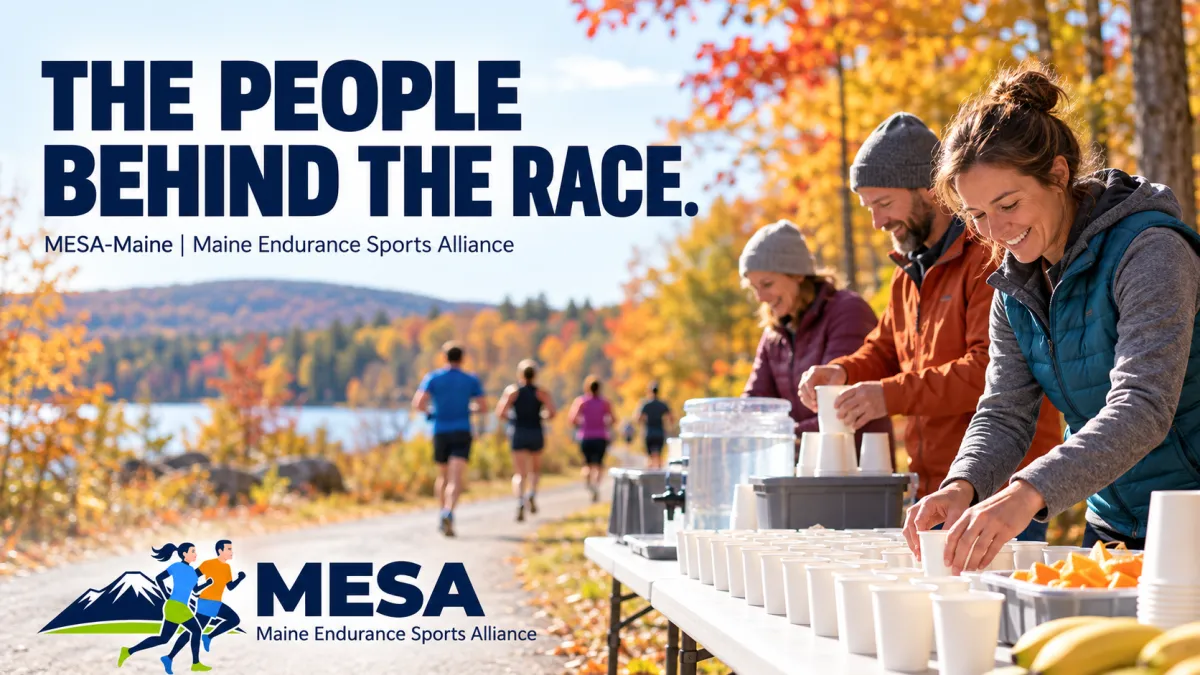
The People Behind a Maine Race Deserve a Place in the Story
Maine Endurance Sports Alliance | MESA-Maine
A race is easy to remember through the people wearing bibs. There is another group worth remembering: the people who help make the event possible.
Course support, coordination and the finish-area experience all involve work that is less visible than a runner crossing the line. Taking time to recognize that work is part of caring for the running community.
Look beyond the finish photograph
A race-day photograph captures one moment. It does not show every conversation, preparation task or hour of support behind that moment.
Consider the person who helps answer a newcomer's question. The volunteer who gives clear directions. The local partner who helps organizers coordinate the event. Their contribution may not appear in a result, but it belongs in the story.
Recognition works best when it is specific. Rather than a generic thank-you, explain what someone contributed and why it helped. Confirm names and obtain permission before publishing a person's photograph or personal story.
Ask what people noticed
After an event, runners and volunteers see different parts of the same day. Both perspectives can be useful to organizers.
What information was easy to find? Where did someone need help? Which instructions were clear? What could be explained earlier next time?
Constructive feedback is most useful when it describes a particular moment. A note about where a direction was confusing gives organizers more to work with than a broad statement that communication should improve.
Include what worked as well. Good practices are easier to preserve when somebody identifies them.
Make room for a first contribution
People sometimes assume that being part of a running event requires entering a race. Supporting the event can offer another way to participate.
If you are interested in helping, contact the organizer and ask what roles are needed, what the commitment involves and what instructions or preparation are required. Different tasks call for different skills and availability.
Be candid about what you can do. A clear conversation is more helpful than accepting an assignment you cannot realistically complete.
Keep the connection after race day
A running community develops through more than one event. It grows through returning participants, local relationships and people who stay connected between start lines.
Share a useful memory, send thoughtful feedback or ask how to be informed about future opportunities. A runner who has benefited from support may eventually become someone else's supporter.
MESA-Maine brings endurance-sports events to Maine communities, with its running series connected to Bangor, Augusta, Lincoln and Waterville. The official Waterville event page lists October 4, 2026. As this year's calendar moves forward, it is a good time to recognize the people behind the events and preserve what can help next time.
Thank the people who helped
If someone made your race experience easier, tell them. If you have useful feedback, share it with the organizer. If you would like to help in the future, start that conversation.
The finish line is a visible part of the event. The people supporting it are part of the community we want to keep building.
Contact information
Laura McIntyre | Maine Endurance Sports Alliance
207-694-9184 | [email protected]
https://mesa-maine.org
